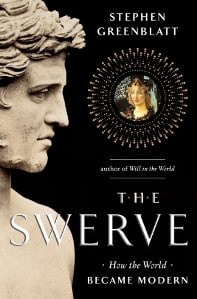
Book Review: The Swerve

The Swerve: How the World Became Modern by Stephen Greenblatt

Stephen Greenblatt’s book, The Swerve: How the World Became Modern, is an excellently well written book that combines both history and storytelling.

It is a scintillating work of historical fiction that is equal to the Name of the Rose by Umberto Eco. Greenblatt’s book revolves around the life and times of a fifteenth century Florentine/Roman scholar and one time secretary to the Pope, Poggio Bracciolini, and his discovery of a lost poem entitled De Rerum Natura by the first century BC poet Titus Lucretius Carus.

The Swerve strings together the complex weave of religion, society, corruption, greed, immorality, Greek philosophy, war, the lives of monasteries, monks, and libraries to tell the story. This narrative is structured by following Poggio Bracciolini in his pursuits. The Book revolves around Poggio finding this poem which was unknown to civilization for a number of centuries.

He believes that the discovery of this poem written by Lucretius was a cornerstone in the development of humanism and the reshaping of what is now become the modern world.

Read more

The Apostolic Faith Newspaper on the Azusa Street Revival

apostolic faith newspaper 1906

The following is a digital copy of the first page from The Apostolic Faith newspaper, Volume 1, No. 1, 1906, which covered the events of the Azusa Street revival.

The Azusa Street revival began in Los Angeles, California in 1906. It was one of the most significant Pentecostal expressions in the 20th century and a cornerstone that generated the expansionism of Pentecostal ideology throughout the world. The Apostolic Faith was their official newspaper.

Read more

Pentecostals and Israel

The connection between Pentecostals, Christian Zionism, Judaism and the State of Israel.

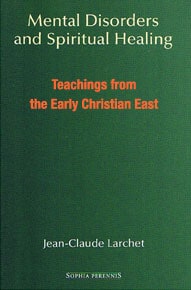
Book Review: Mental Disorders and Spiritual Healing

Mental Disorders and Spiritual Healing: Teachings from the Early Christian East by Jean-Claude Larchet is an examination of mental illness from an Eastern Christian perspective.

Larchet completes a definitive work on the history, perceptions, and practices of the Eastern Church on mental illness. One has to read it for its historical value. This text is not for those looking at therapeutic solutions for those suffering or dealing with a person struggling with some form of mental illness.

The author’s knowledge of modern psychological conventions and Eastern Church practices is finely interwoven. He provided substantial documentation.

Read more