Blessed Andrew speaking in tongues — the original texts

Andrew of Constantinople speaking in tongues – the original Greek and Latin. Andrew of Constantinople, also known as Andrew the Fool, lived in the tenth-century. An English translation along with technical notes will be posted within the next seven days. First reference to speaking in tongues As found in Nicephori Presbyteri. Vita S. Andreae Sali. …

Read more

The Legend of Francis Xavier speaking in tongues

The connection between the sixteenth-century Jesuit missionary, Francis Xavier, and speaking in tongues.
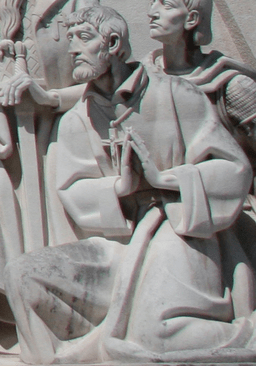
St. Francis Xavier depicted at the Padrão dos Descobrimentos. A monument celebrating the Portuguese age of exploration.

The story of Francis Xavier speaking in tongues is a complex one that straddles between the real and mythical person. Though a celebrated pioneer, great organizer, highly adaptive educator, and a prolific networker, his legend is even better. This is a study of Francis Xavier, how he became connected with and the controversy surrounding his speaking in tongues. In the end, the reader will understand how the christian doctrine of tongues was understood and practiced in this era.

The controversies that surround Xavier speaking in tongues put him into the top five narratives of the christian doctrine of tongues throughout the centuries.

Research was a lengthly process. This is a summary of the findings. For the actual source texts, extended quotes, and translations, see Technical Notes on Francis Xavier Speaking in Tongues

Who was Francis Xavier?

Francis Xavier lived from 1506 to 1552 and originally hailed from Sanguesa, in a country state called Navarre. The kingdom of Navarre is long gone, but the city of Sangüesa continues to exist in the northernmost reaches of Spain. This city borders on France and is a short distance from Portugal. Xavier studied in Paris, and after finishing his education, made his way to Venice where he passionately worked among the sick. King John the III of Portugal had solicited Ignatius of Loyola and his newly formed Society of Jesus to evangelize the West Indies, especially the regions controlled by Portugal. Ignatius had already selected a number of individuals which excluded Xavier, but due to sickness of one of the original members, he was called in as a replacement. Thus began the story of one of the greatest foreign missionaries of all time.

Read more

Technical Notes on Francis Xavier speaking in tongues

The following are quotes from the principal sources on the real Francis Xavier and the legend of his speaking in tongues. This is a quotes only document — a comparative analysis of all this information is in the final stages and will be posted as a separate article.

The debate and controversy that surrounded St. Francis Xavier’s alleged speaking in tongues was a source of internal friction within Catholicism, especially the among the Jesuits themselves, and a rallying point for Protestants. The real Francis Xavier did not speak in tongues, but the legend of Francis did.

How this legend began and grew is an interesting and complex story.

This leads into a journey about how Medieval Catholics viewed speaking in tongues; what it meant to them, how it was applied, and the politics that surrounded this practice.

The legend of Francis Xavier speaking in tongues ranks within the top five themes throughout the two-thousand-year history of the christian doctrine of tongues. There is no doubt that this legend is the most complex one out of any documents in the Gift of Tongues Project. There are numerous reasons why the mystery of Francis Xavier is difficult. The original documentation is multilingual; spanning Spanish, Portuguese, Italian, Latin, and French. The subject is wrapped in Medieval Catholicism, which has its own unique history, customs, personalities and procedures that outsiders such as myself have a difficult time to grasp. Xavier’s gift of tongues is deeply embedded with international and national politics. The topic is shrouded in religious symbols and shifts into the Protestant realm where Rationalists especially took critical aim. It spans across continents and new worlds that most Europeans hardly knew at the time. The maps, names and locations mentioned in the texts are far from the modern English mind.

This article is produced to meet a requirement of the Gift of Tongues Project which is the digital capturing of source texts. The following are actual quotes from testimonies, writers, and publications that highly influenced and perpetuated this myth. These are actual quotes with little or no commentary from myself relating to Xavier speaking in tongues. They are organized according to date; from the earliest publications shortly after Xavier’s death, all the way into the twentieth-century. The Italian, Spanish and Portuguese originals are not digitally captured because I have no knowledge of these languages or the ability to do data-entry in them. However, links to the original text along with an English translation is supplied where appropriate.

This file is designed for the researcher, not for the casual reader. This is the longest article found in the Gift of Tongues Project because of the amount of source material. It may take a few moments to load the full contents into the browser, please be patient.

TOC

  • Pedro de Ribadeneira
  • Giovanni Pietro Maffei
  • Horatius Tursellinus
  • João de Lucena
  • The Book Monumenta Xaveriana:
    • Emanuel Fernandez
    • Thomas Vaz
    • Antonio Peirera
    • Pope Urban VIII
  • Daniello Bartoli
  • Dominique Bouhours
  • Pope Benedict XIV
  • John Douglas
  • Hugh Farmer
  • Charles Butler
  • Henry James Coleridge
  • Andrew Dickson White
  • A Jesuit response to Andrew Dickson White
  • Edith Anne Steward
  • James Brodrick
  • Georg Schurhammer
    • Volume II
    • Volume IV

Read more

Three Welsh men speaking in tongues

The story of three sixth-century Welsh Christian Saints and their encounter with the gift of tongues. St. David, Padarn, and Teilo are important figures in the history of Wales. Who exactly were they and how do they fit in the history of tongues speaking? It is necessary to narrate the lives of these revered Welsh …

Read more

The Struggle for Jewish Identity after the Destruction of the Temple

How the Jewish community adapted their religious system after the destruction of the temple in 70 AD.
The loss put Judaism at a crossroads. The destruction meant an end to the sacrificial system – a concept central to Jewish life and faith. This forced the Jewish community to adapt.
The best exposition and solution to this problem is by one of modern Israel’s great scholars–Ephraim E. Urbach. He covered this in his great work, The Sages: Their Concepts and Beliefs.
For those new to the legacy and writings of Mr. Urbach, here is a brief description: he “was a distinguished scholar of Judaism. He is best known for his landmark works on rabbinic thought, The Sages, and for research on the Tosafot. He was an unsuccessful candidate to be President of Israel in 1973.”1
Enclosed is his coverage on how the new Jewish identity had shifted from sacrifice to study and charity.

Read more

Vincent Ferrer and the Gift of Tongues

Vincent Ferrer was a Dominican missionary in the 14th century (1350 to 1419 AD). Legend has it that his native tongue was Valencian, a dialect of Catalan spoken in Spain. He didn’t know any other language. This did not stop his audience from miraculously hearing him in their language. This is a historic variant of …

Read more

St. Norbert of Xanten Speaking in Tongues

Translation and analysis of St. Norbert of Xanten. A 12th-century Christian who is claimed to have spoken in tongues. The medieval biography of the Saints called Acta Sanctorum only includes a brief reference to him and it is not clear whether it was a miraculous act. Perhaps it was a description of St. Norbert as …

Read more

St. Patiens Speaking in Tongues

St. Patiens was on a missionary trip to Metz and was supernaturally able to speak their language upon arrival – but there is a twist to this story.