The Camisards, tongues and prophecy

The religious expressions of prophecy and especially speaking in tongues by the Camisards in 18th century France.
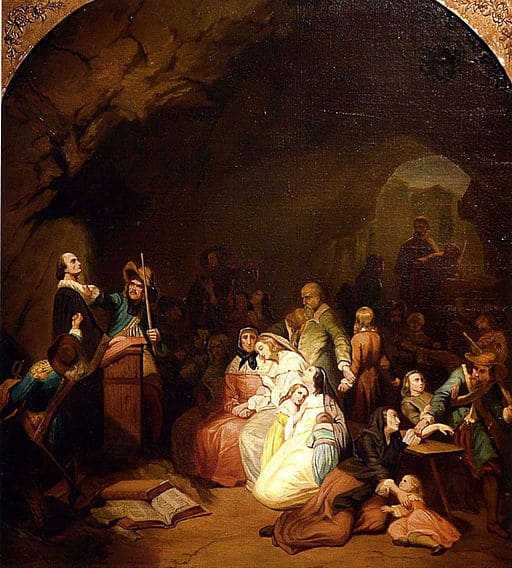
A Protestant Assembly surprised by Catholic troops by Karl Girardet, 1842.

The Camisards have a special narrative in the annals of Christian history and it is a sad one. Their story would have been forgotten if their speaking in tongues and their habitual use of prophecy was their mark in history. However, these are mere expressions of a greater problem of political and religious persecutions that continually harassed and cost so many lives. It is estimated that 500,000 Camisards fled France or were killed.1 These pogroms are the more important story, but the persecutions opened new Protestant expressions of piety that were unique, especially the realms of speaking in tongues and prophecy.

Read more

Emile’s Encounter with Christ

Third Beach
Third Beach, Vancouver. Creative Commons License by Kyle Pearce

If Jesus walked on a Vancouver beach and saw Emile, what would His reaction be?

Emile is an odd man. No one can define him because his problem is different thoughts, perceptions, and behaviors. All of these have defied a medical, spiritual, or psychological solution.

Read more

St. Paul's Final Hurrah

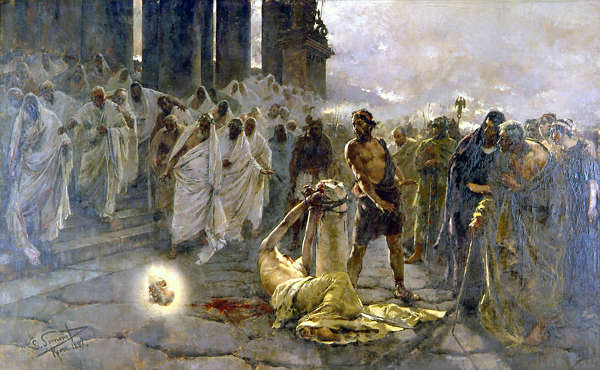
Enrique Simonet, Painter, Decapitation of St. Paul
Enrique Simonet (1866-1927). The Beheading of Saint Paul

Paul was executed in 51 AD under the rule of Nero according to the third-century Christian author, Ammonius of Alexandria, and two other writers.

A deeper look into this text and a translation.

Ammonius was trying to dispel a misunderstanding of the Herod dynasty about the timelines of Christ and Paul. Both are interesting but the history he ascribes to Paul is especially intriguing. By doing so, he gave the above information.

Few know about Ammonius, and less about his writings. Ammonius lived in Alexandria and was a noted Biblical scholar.2 Unfortunately, only remnants of his writings are available today.

An interesting person along with important historical texts. His persona beckons an English translation so that his contribution is more widely known. So, this is what the rest of this article intends to do.

The following translation has a little crossover of John Chrysostom and some influence by the eleventh century writer, Theophylacti of Bulgaria. It appears from a very informal look that most of this is penned by the hand of Ammonius.

Read more

Charismatics, Headaches and Healings

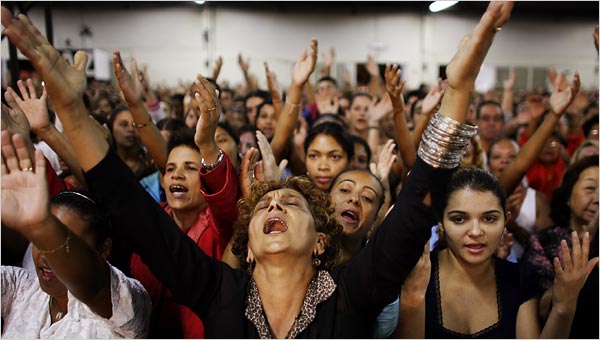
A woman with an audience behind her hands up praising God

A new framework is needed to confront the excessive focus on miracles and healing within Charismatic practice and liturgy. When taken to extremes, these practices can delay medical care and alienate the broader public.

Read more

Book Review: The Great War for Civilisation

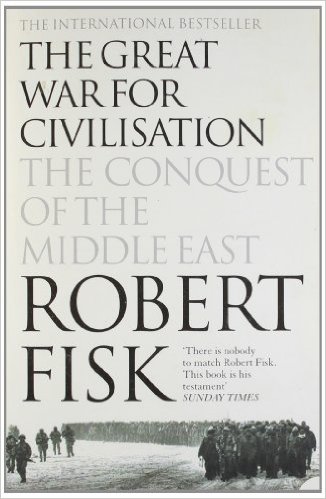
A picture of the front cover of the book, The Great War for Civilisation

The Great War for Civilisation: The Conquest of the Middle East by the seasoned author and journalist, Robert Fisk is a compilation of his over 30 years of on-field experiences in the various war zones around the Mediterranean and Middle East. The result is comprehensive portrait from a litany of primary sources that makes this book a definitive work.

This work is difficult, challenging and long, but worth every word. One cannot read this in one, or even two sittings. Nor can it be read for great lengths of time because the dark corners of humanity are ever present in this book. Such imagery requires one to pause repeatedly and escape from such realities.

Fisk purposely over-documented The Great War for Civilisation. There is no other choice for the author to do this as detractors, especially those of government, military and enforcement institutions, would like to refute such findings and discredit him personally. The greatest strength of his book is the documentation that takes it out of the realm of his personal opinion and into the place of factual history. It is a work that has been sorely lacking in this genre.

Read more

The Jews In Their Land During the Talmudic Age

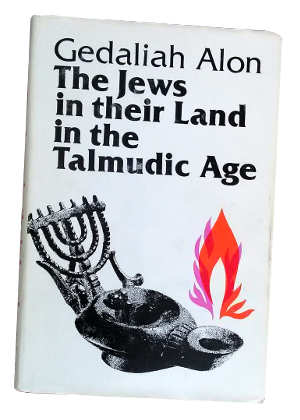
Book Review: The Jews in their Land in the Talmudic Age by Gadaliah Alon.

A magnificent piece of scholarly work that touches on life in Israel from 70 to 640 A.D.

His retelling of the story of Middle-East mankind during this period draws from classical Greek, Roman, Patristic, and Rabbinic sources that is simply astounding. He combines religion, culture, language, economic systems, leadership structures both in the Jewish community and in context of Roman occupation, historical analysis, and social perspectives into an intelligent and cohesive narrative. He especially excels covering the change in religious, social and leadership structures after the destruction of the Temple, and the traditions that underlies the development and establishment of the Mishnah and Talmud.

Read more