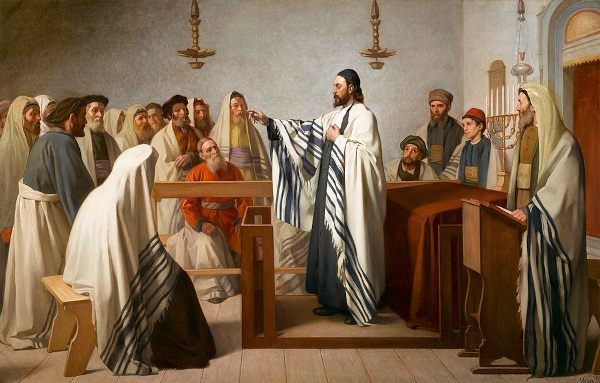
Part 2 of a series examining the Tongues of Corinth as liturgy. Part 1 focused on the various theories, while this one features commentaries and references to tongues as liturgy throughout history. Together, these essays serve as an expanded preface to Volumes 3 and 4 of the book series Speaking in Tongues: A Critical Historical Examination.
3. A Survey of Christian Texts on the Liturgy from Corinth Onwards
The following is a survey of Christian commentaries and references through the centuries that relate to the liturgy of speaking and interpreting—an evolution of the rite mentioned in 1 Corinthians 14.
The selections are works that dwell, even if slightly, on the historical background to the liturgical custom of speaking, interpreting, and related rites. It is not exhaustive, but gives a reasonably good portrait. Often, Church leaders like Augustine chose to overemphasize I Corinthians 14:1 to ‘pursue love’ and ignore the historical and cultural framework behind the words. Those types of commentators and references are skipped.
Justin Martyr (100–165 AD) outlines liturgical themes such as the public reader and the amen construct—an office and symbol that fits nicely in with the Corinthian tongues.1
Origen (185–253 AD) is often highly controversial and polarized in the tongues debate. When he referenced 1 Corinthians, he interpreted it as the role of the intellect and knowledge in the Christian life. He offered very little historical or analytical information.2
Epiphanius, Bishop of Salamis (310–403 AD) provided a critical piece to the puzzle. He stated that it was a clash between different Greek ethnic groups over Hebrew as a sacred language of worship. There was no reference to an out-of-this-world mystical experience, or something supernatural. Hebrew, Greek, teaching the Law — these indicators combined suggest it to be a liturgical or didactic problem within the Corinthian gathering. These factors necessitate the need to find more information on Jewish and early Church liturgy.3
John Chrysostom (347–407 AD) in his Homilies on Pentecost, and Homilies on First Corinthians, seldom addressed historical or cultural antecedents. In the few moments he did, it was either foreign languages or the liturgy. It is consistently found in Chrysostom’s hermeneutics that the tongues of Babel, Pentecost and Corinth were the same thing. He mixes verses from many books to make a linear narrative on the doctrine.4
Then there were the writings attributed to Cyril of Alexandria (412–444 AD)[noteS. Cyrilli Alexandrini. In Epistolam I Ad. Corinthios. XII—XIV. MPG: Vol. 74. Col. 887-894.][/note], who associated I Corinthians 14:10 with their itinerant preachers whose duty was to visit Churches routinely throughout the Alexandrian Church empire. This area was a vast region that had many ethnic and language groups. The ability to speak in various languages was a requirement for these preachers to teach and pray.
A significant find was that the Alexandrian Church community had psalm-singing, prayers, and the amen in their liturgy—very close to what the Corinthians practiced. Their custom was to have a Skopos, or the Keimonos, responsible for the laity or new entrants to understand the rites, words, and actions of the church. This office is similar to what Paul called the Anapleron of I Corinthians 14:16.5
Theodore of Cyrene, (423–457 AD), wrote that the tongues of Corinth were about properly preaching the faith and translating from foreign languages into Greek.6
The fourth-century and arguably later Ambrosiaster text gives some pertinent clues. This Latin document endorsed the problem of Corinth being the use of Hebrew and Aramaic, and that the early Church inherited the customs and rites from the synagogue.7
St. Ephrem (306–373 AD), otherwise known as Ephrem the Syrian, lived in an area that borders today between Turkey and Syria, presently occupied by a Kurdish majority. He viewed I Corinthians 14:13 as a problem of Greek being a sacred Christian language. If the person conducting the service did not know Greek and did not understand what the words were behind the liturgical rite they were speaking, this caused difficulty.[noteEphrem the Syrian. (1898). Nineteen Hymns on the Nativity of Christ in the Flesh. In P. Schaff & H. Wace (Hrsg.), J. B. Morris & A. E. Johnston (Übers.), Gregory the Great (Part II), Ephraim Syrus, Aphrahat (Bd. 13, S. 260). New York: Christian Literature Company.][/note]
This ritual of Greek being a sacred language of Church liturgy was verified by Egaria, a fourth-century world traveller. She documented the speaker/interpreter ritual while visiting a Church in Israel and surrounding areas where Syriac was the principal language. The Bishop only conducted formal services in Greek. A priest would stand by and immediately translate it into Syriac.8
John of Damascus (675–749 AD), describes to his audience that Paul’s reference to the tongues of angels should be taken metaphorically as a high level of adoration.9 His commentary notes on I Corinthians 14 are passive on the topic of tongues rather than active. He recognized the problem related to foreign languages. He did not see any tensions or controversy in his Christian world over the subject and skims over it.
The Bulgarian archbishop, and commentator, Theophylact of Ohrid (around 1055 AD) claims that Paul used Hebrew or Aramaic words in Corinth to counter Greek pride.10 He understood the passages of the speaker/interpreter as a problem of a speaker addressing the audience in his foreign language and unable to translate it into the common vernacular.[noteTheophylacti Bulgariae Archiep (also known as Theophylact of Ohrid). Expositio in Epist. I Ad Corinth. XIV. MPG. Vol. 124. Col. 735][/note] He also made a strong assertion that those who spoke in tongues understood the language they were speaking. Although aware of the Montanist movement, he makes no religious connection with the magical, esoteric, heavenly, or ecstatic state exhibited by them.
Those who receive the text, it appears to me, fear the absurdity of Montanus. He introduced this heresy that the prophets totally did not understand what they were saying but those who are restrained by the Spirit spoke certain things, but they did not know what they were saying. This has no place here.11
Thomas Aquinas (1225–1274) unlocks many mysteries of the Corinthian tongues in his lectures on I Corinthians. He was a great master of synthesizing a comprehensive library of various thoughts and giving them order. His combination of intellectual acumen and mysticism ought to make him the patron saint of Pentecostals and Charismatics. His Lectures on I Corinthians are published posthumous notes taken by his students, especially Reginald of Piperno.
His assumption about tongues revolves around a foreign human language that is either miraculous or liturgical speaking in a foreign language(s). He arrived at his conclusions by consulting a variety of sources and perspectives, including glosses from ancient writers. There is no reference to an ecstatic, angelic, or a heavenly one in his works. This absence indicates that he had no knowledge of a doctrine of tongues subset known as glossolalia, and thus there is no attempt to resolve these in his interpretational schema. This result is consistent with all the church data up until the 1700s.
The Lectures on I Corinthians demonstrate the Corinthian Church problem as the use of a foreign or liturgical language. Firstly, he explained unknown tongues were about speaking in a foreign language that other people did not understand. There are several examples from his works, but the following is the most succinct:
. . .but in Corinth because they were curious. They more cheerfully wanted this gift than the gift of prophecy. Because it is now being said here to speak in a tongue, the Apostle means in an unknown language, and not having these things explained, as if he was to speak in the German tongue to some Gallic [person] and the result that it is not explained, this is speaking in a tongue. From whence all speech having not been understood nor explained, no matter what it is, is specifically speaking in a tongue.12
Aquinas also referred to a traditional church liturgy that performed public readings of Scripture. He associates this practice with the problem tongues in Corinth, where people did not understand what was spoken. The Church had a calendrical cycle structured around the Latin readings and this is the problem he had to resolve—what if people did not know Latin? The Public Reader performed this rite—one of the lower offices of the priesthood, an entry-level position. Whether this reading was a daily or weekly rite, Aquinas does not make clear.
This great theologian goes on to state that public reading was important. The emphasis was on reading or chanting Latin. However, the difference between his church and the earliest one in Corinth was maturation. He posited that his church had developed an education system where people had developed an understanding of Latin as a sacred language. The people of Corinth had not mastered whatever foreign or priestly language was spoken in their midst.13
He believed that the liturgy of public readings of the Epistles and Gospels replaced the office of tongues in the early Church.14
Martin Luther, one of the most important figures in the Reformation, and who has had a tangible impact on Western history, also saw the Corinthian’s tongues sequence as a problem of foreign languages in the liturgy:
Also the fool does not understand St. Paul’s words correctly when he writes of speaking in tongues (I Cor. 14[:2-29]). For St. Paul writes of the office of preaching in the congregation, to which it is to listen and to learn from it, when he says: Whoever comes forward, and wants to read, teach, or preach, and yet speaks in tongues, that is, speaks Latin instead of German, or some unknown language, he is to be silent and preach to himself alone. For no one can hear it or understand it, and no one can get any benefit from it. Or if he should speak in tongues, he ought, in addition, put what he says into German, or interpret it in one way or another, so that the congregation may understand him.15
The early Protestant leader, Jean Calvin, (1509–1564 AD), understood speaking in tongues as a foreign language.16 He fails to explain how the foreign languages caused such divisions within the Corinthian assembly.
A trajectory of the Christian rite of tongues being the liturgical speech in a sacred language was passed down for many more centuries with no alternative readings. The results were found both in Catholic and early Protestant works. The Flemish Jesuit exegete, Cornelius À Lapide (1567–1637 AD) remarked on I Corinthians 12:14 (interpretation of tongues) as:
To another the interpretation of tongues. Of obscure passages, especially of Holy Scripture. Hence there were formerly in the Church interpreters, whose duty was fourfold: (1.) there were those who, by the gift of tongues, prophesied or sung hymns in a foreign language ; (2.) those who, inspired by the Holy Spirit, spoke of obscure and deep mysteries ; (3.) those who publicly expounded the letters of S. Paul and of others sent to their people ; (4.) those who turned them into another language.17
He found the Corinthian interpreter had purposes of explaining, expounding, singing, or translating into another language.
The early Protestant Hebraist scholar, John Lightfoot (1602–1675), believed Corinthian tongues to be the miraculous restoration of Hebrew.18 His work was picked up by the Calvinist Baptist writer and theologian, John Gill, (1697 – 1771) who convincingly tried to apply Hebrew as the source language in the Corinthian conflict without reference to anything miraculous.19 The Hebrew liturgy as a solution to the Corinthian conflict hardly appears in any Christian literature after Gill.
The Renaissance era with its roots deeply set into the rediscovery of classical philosophy, literature, and arts, began to make a significant shift in the doctrine of tongues. The Corinthian tongues became a topic especially with German philosophers and theologians. One of the earliest, but not the first, German writer to contemplate on the subject from a Renaissance perspective was Christian Gottfried Bardili, whose work, Significatus Primitivus Vocis Προφητης ex Plantone Erutus. (CVM Novo Tentamine Interpretandi I. Cor. Cap. XIV), back in 1786, He looked at I Corinthians from the influence, language, and culture surrounding Plato. His work is a clever combination of Latin, Greek, and German, written in an enigmatic way. He split-hairs within the Greek language20 to make his theory work that Paul was not referencing foreign languages. Bardili instead pivoted tongues to the prophetic realm. The prophetic office was to interpret divine, oracular, or sayings from those possessed by the Spirit.21
Bardili represents the beginnings of the glossolalia theory to the Christian doctrine of tongues and a new interpretation for the tongues of Corinth.
We shall jump past some important milestones and dwell on the entrance of the glossolalia theory into the English speaking world. The explosion began through a book by F. W. Farrar (1831–1903 AD), The Life and Work of St. Paul. The Anglican Archbishop of Canterbury stated: “The glossolalia, or “speaking with a tongue,” is connected with “prophesying,” that is, exalted preaching,and magnifying God.”22 He promoted the idea that Corinth was a mystical experience with no reference to foreign languages.
Farrar’s subsequent novel, Darkness and Dawn, which had elements of Corinthians glossolalia built into the story, was a hit with the early Pentecostal movement. His work was made into a tract, advertised and sold through their many publications.23
Glossolalia supplanted the traditional idea of Corinthian tongues as a foreign language or liturgical problem. The power of this theory is so strong that it excluded any other approach.
4. CONCLUSION
The evidence that points to the Corinthian mystery tongues of Corinth as a liturgical conflict is a compelling one. It at least deserves equal consideration with glossolalia and/or a divine prayer language theories.
If you want to know about the history of Pentecost through the centuries, then the solution is to go to Volume 2. Volume 1 covers the origins and development of glossolalia and the Pentecostal establishment of a divine language.
Speaking in Tongues: A Critical-Historical Examination, Volume 3, focuses on Corinthian Tongues as a continuation of the traditional Jewish liturgy. Some Bible students prefer a commentary so this is found in Volume 4.
It is with a spirit of service and hope that these book volumes, derived from the Gift of Tongues Project—the largest digital repository of source texts concerning the Christian doctrine of tongues—assist the readers in a proper understanding and appreciation of this rite. The purpose is to illuminate the history of the doctrine and trace its development across the centuries from a Christian historical theology perspective.
- First Apology: 67. Translated by Marcus Dods and George Reith. From Ante-Nicene Fathers, Vol. 1. Edited by Alexander Roberts, James Donaldson, and A. Cleveland Coxe. (Buffalo, NY: Christian Literature Publishing Co., 1885.) Revised and edited for New Advent by Kevin Knight.. The Greek is found at MPG. Vol. 6. S. Justini. Apologia I Pro Christianis. Chapter 67. Col. 429
- Claude Jenkins, “Documents; Origen on I Corinthians,” Journal of Theological Studies 10 (1909). Pg. 29ff and another version found in Catenae: Graecorum Patrum in Novum Testamentum. Tomus V. J.A. Cramer. ed. Oxonii.1844. Pg. 249 In other texts he does slightly write about tongues, but not in his coverage of Corinthians. See my article, Origen on Tongues, found at charlesasullivan.com
- See my translation https://charlesasullivan.com/4500/the-epiphanius-text-on-the-tongues-of-corinth-in-english/ Or if you want to see a source copy: Epiphanius (Anchoratus und Panarion) von Dr. Karl Holl. Zweiter Band. Panarion Haer. 34-64 Leipzig: J.C. Hinrich’sche Buchhandlung. 1922. Pg. 168-171.
- His homilies, especially Homily 35 can be found at https://www.documentacatholicaomnia.eu/03d/0345-0407,_Iohannes_Chrysostomus,_Homilies_on_First_Corinthians,_EN.pdf See also https://charlesasullivan.com/5347/chrysostom-doctrine-tongues/ On a personal note, I don’t like the hype about Chrysostom. He is over rated.
- See https://charlesasullivan.com/3235/the-mysterious-anapleron-of-i-corinthians-1416/
- Theodoreti Episcopi Cyrensis. Interpretatio Epist. Ad. Cor. XII—XIV. MPG: Vol. 82. Col. 323–338. Especially see Column 325.
- Ad Opera S. Ambrosii Appendix. Comment. In Epist. 1 Ad Corinth. MPL Vol. 17. Col. 250
- http://users.ox.ac.uk/~mikef/durham/egetra.html. Based on the translation reproduced in Louis Duchesme’s Christian Worship (London, 1923)
- S. Joannis Damasceni. In Epist. Ad. Corinth. XII—XV. MPG: Vol. 95. Chapter XII. Col. 676
- Theophylacti Bulgariae Archiep (also known as Theophylact of Ohrid). Expositio in Epist. I Ad Corinth. XVI. MPG. Vol. 124. Col. 793
- My translation from Theophylacti Bulgariae Archiep (also known as Theophylact of Ohrid). Expositio in Epist. I Ad Corinth. XIV. MPG. Vol. 124. Col. 739
- My translation. Lectures on I Corinthians 14:18-22. As found in Reportationes 088 R1C cp 14 Pg. 387 lc1
- Lectures on I Corinthians 14:23-26. As found in Reportationes 088 R1C cp 14 Pg. 389ff lc5
- Lectures on I Corinthians 14:27-33. As found Reportationes 088 R1C cp 14 Pg. 390 lc6
- Against the Heavenly Prophets in the Matter of Images and Sacraments, 1525 by Hans J. Hillerbrand. As found in The Annotated Luther: Volume 2—Word and Faith. Kirsi I. Stjerna, Volume Editor. Minneapolis: Fortress Press. 2015. Pg. 101
- Jean Calvin. Commentaries on the Epistles of Paul the Apostle to the Corinthians. Translated by John Pringle. Volume First. As found at https://www.ccel.org/ccel/calvin/calcom39.xxi.i.html
- Cornelius À Lapide. The Great Commentary of Cornelius À Lapide. Translated by W. F. Cobb. Edinburgh: John Grant. 1908. Pg. 307, 329
- John Lightfoot. A Commentary on the New Testament from the Talmud and Hebraica: Matthew – I Corinthians. Translator unknown. Grand Rapids: Baker Book House. 1979. Pg. 256
- John Gill. John Gill’s Exposition of the Bible as found at https://www.biblestudytools.com/commentaries/gills-exposition-of-the-bible/1-corinthians-14-27.html
- C. G. Bardili. Significatus Primitivus Vocis Προφητης ex Plantone Erutus. CVM Novo Tentamine Interpretandi I. Cor. Cap. XIV. Göttingen. 1786. Pg. 27
- C. G. Bardili. Significatus Primitivus Vocis Προφητης ex Plantone Erutus. CVM Novo Tentamine Interpretandi I. Cor. Cap. XIV. Göttingen. 1786. Pg. 53
- F. W. Farrar. The Life and Works of St. Paul. London: Cassell and Company. 1879. Pg. 53
- For example, see the advertisement in the The Pentecostal Evangel: A Family and Missionary Paper, the Official Organ of the Assemblies of God. June 9, 1923. No. 500. For further examples read, https://charlesasullivan.com/8264/early-pentecostal-tongues-notes-quotes/

About Charles A. Sullivan
Charles Sullivan is fascinated by the spread of ideas, from ancient texts to modern issues. He particularly examines how faith, spirituality, mysticism, politics, and technology have evolved and influence us today.